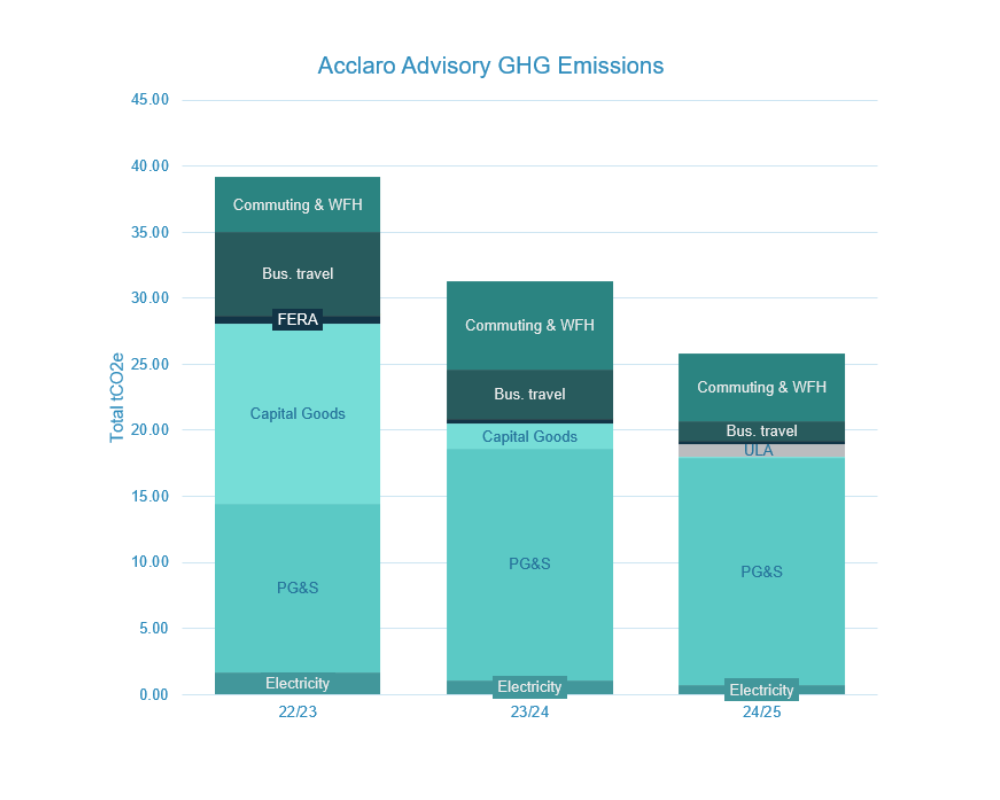
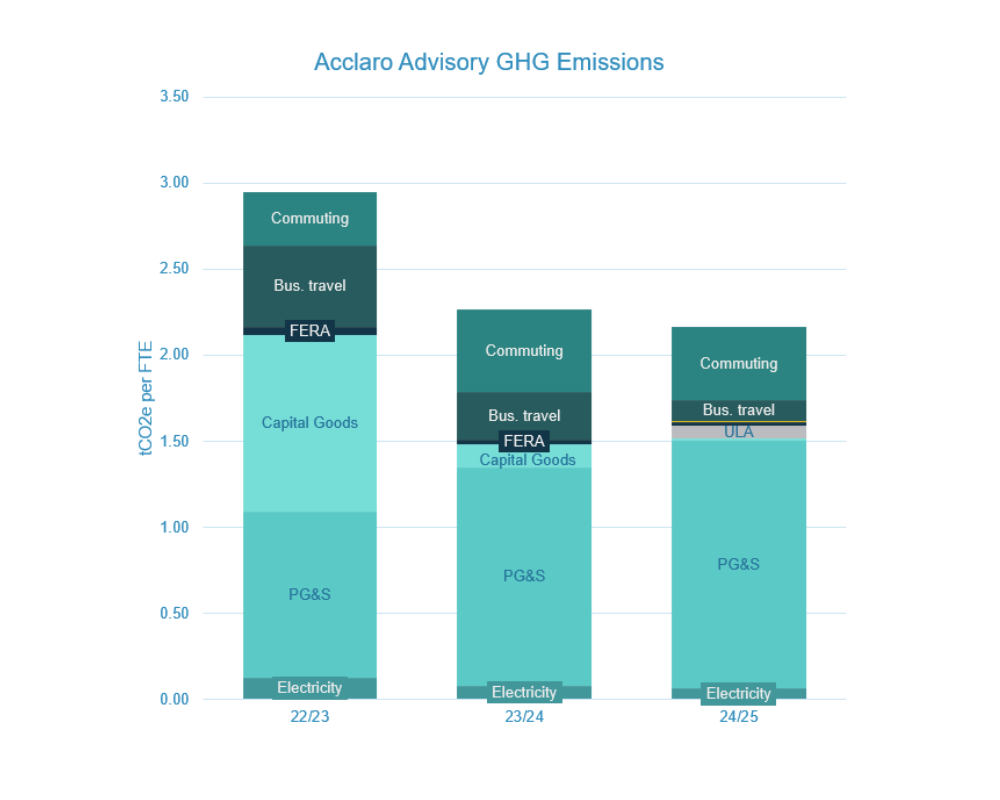
Our carbon emissions

As an SME our impacts are relatively small but our rapid growth means we have to work harder to curb carbon emissions. From the outset we have used natural ventilation, engaged with our customers through technology , promoted travel to work by public transport and prioritised the use of local suppliers. We have adopted a fully hybrid working model that improves work/life balance, reduces travel and reduces the amount of office space needed to support our operation but requires us to take account of working from home emissions. We publish both our absolute emissions and emissions per FTE and from 2021 include relevant Scope 3 emissions.
We have committed to a Net Zero target and will be following the SBTi methodology that requires emissions reductions of at least 90%. We are signatories of the SME Climate Commitment which requires us to halve our emissions by 2030, achieve Net Zero by 2050 at the latest and report annually on our progress.
To celebrate our 10th anniversary in May 2022 we offset all our historic emissions using high quality Gold Standard offsets. From that point on we are not only offsetting our annual carbon emissions but setting an internal carbon price higher than market value to create a transition fund that we can invest in beyond value chain decarbonisation to become climate positive. You can read more about our carbon compensation activities here.
Starting at home: Our emissions as a business
Acclaro measures its greenhouse gas emissions annually across our operations and relevant value-chain activities, including purchased electricity, purchased goods and services, capital goods, business travel, employee commuting and working from home.
For FY2025/26, our location-based greenhouse gas footprint was 21.85 tCO₂e, with average FTE of 12.22 and emissions intensity of approximately 1.79 tCO₂e per FTE. Our relatively low absolute footprint reflects the nature of our business and a culture focused on keeping the environmental impact of our operations proportionate.
Purchased Goods and Services remained our largest emissions category at 9.66 tCO₂e, down from 21.20 tCO₂e in the prior year. Part of this movement reflects refinements to our supplier-spend assessment, including the treatment of client pass-through costs and improved supplier classification. We therefore consider year-on-year movements alongside changes in business activity and improvements in our calculation methodology.
Employee commuting and working-from-home emissions increased from 6.64 tCO₂e to 9.23 tCO₂e, driven mainly by greater office attendance among London-based employees during the year. Location-based electricity emissions decreased, reflecting both lower electricity consumption and a lower UK grid emission factor.
Scope 1 emissions remained nil. As a tenant, Acclaro has limited direct control over whole-building energy use, so our focus remains on maintaining a low-impact operating culture, improving the quality and consistency of our emissions data, and understanding where further reductions are achievable.
Alongside our efforts to measure and reduce emissions, Acclaro also maintains an offsetting programme for its reported footprint, while continuing to prioritise emissions reduction and improvements in the quality of our underlying data.